Barcelona is hosting the Smart City Expo World Congress, where from November 4–6, the largest Czech national exhibition will be presented — including the city of Brno and its local innovation ecosystem.
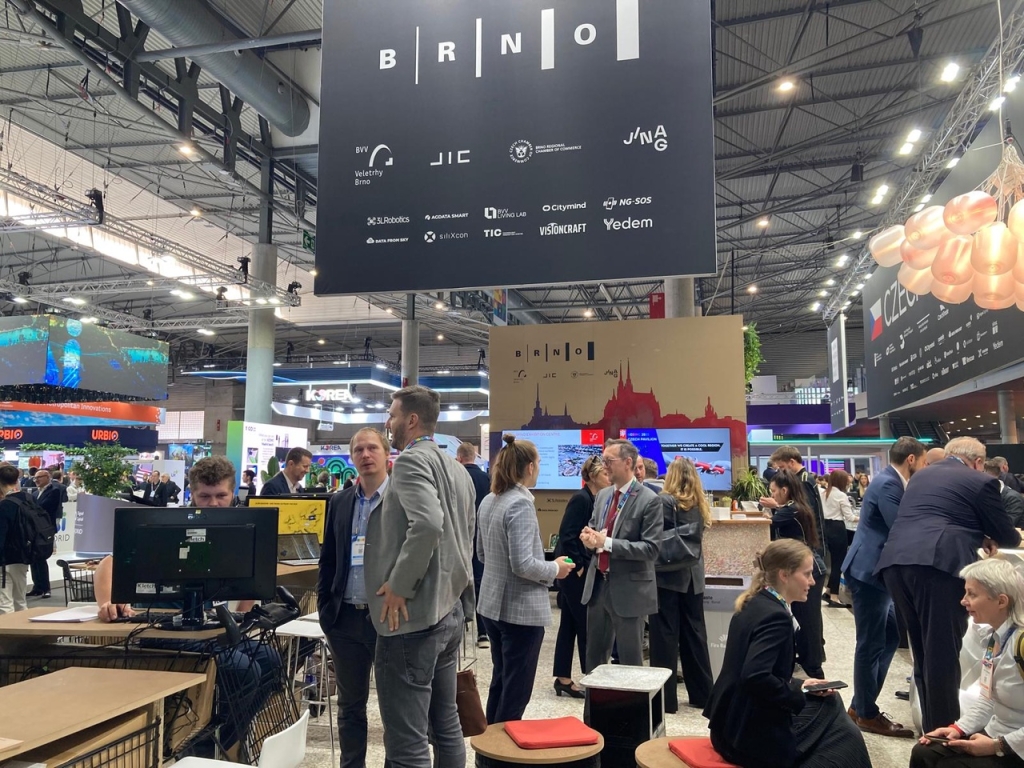
On a 416 m² exhibition space, under the leadership of the Ministry of Industry and Trade, five ministries, four cities (Prague, Brno, Plzeň, and Říčany), a dozen institutions from their ecosystems, 35 innovative companies, and seven universities will join forces. In total, over 60 organizations and approximately 200 representatives of the Czech Smart City community will gather at the shared Czech pavilion. These numbers represent a record — both in terms of exhibition size and the number of exhibitors and participating entities — marking an unprecedented cross-sectoral presence.
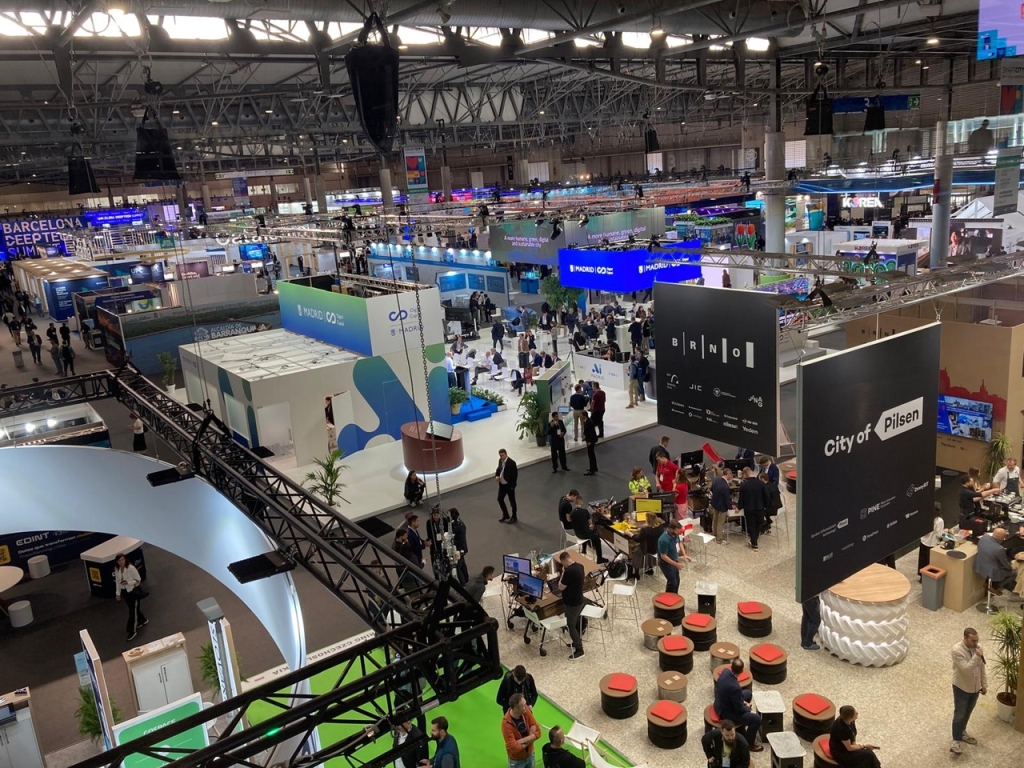
The Smart City Expo World Congress in Barcelona, organized by Fira Barcelona, is the world’s leading event focused on urban transformation and innovation — from digitalization to blue-green infrastructure and mobility. Each year, the event brings together the global community of so-called city changers — around 25,000 change-makers including academics, municipalities, innovators, and policymakers. Their shared goal is to improve city operations, enhance daily life for residents, and find local solutions to global challenges. This comes at a time when human civilization — increasingly concentrated in cities — is already exceeding seven of the nine planetary boundaries used by scientists to define safe limits for human activity on Earth.
Only last year, the Czech Republic made its debut at the 13th edition of the expo with a national exhibition. That premiere left a strong impression: it was a record Czech participation, and the national booth won the Green Exhibitor Award for the most sustainable exhibition among 1,100 exhibitors. The award-winning concept was based on circular economy principles and used unique Czech materials from PackWall, Plastic Guys, Balance Is Motion, and Myco. In practice, this meant, for example, floors and walls made from compressed Tetra Pak panels, and a bar and meeting zone built from boards melted from plastic waste.
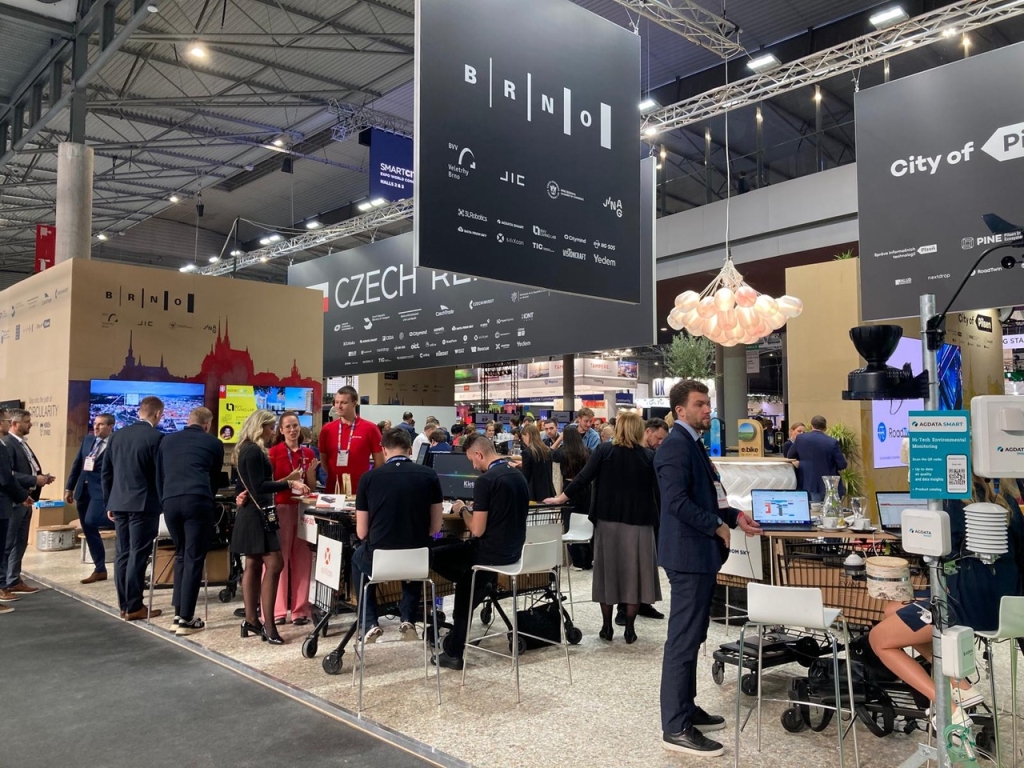
The Czech Republic’s rapid rise is driven not only by social responsibility but also by the awareness of new business opportunities. Urban transformation is a global challenge, and the Czech Republic, with its strong presence in Barcelona, is signaling its international leadership.
One of the key principles of this strategy is reflecting global megatrends, such as urbanization and the spread of the urban lifestyle, which shapes the use of planetary resources and processes that affect areas beyond cities and across borders. According to estimates, the global Smart City market is expected to quadruple over the next decade, with its importance continuing to grow. That’s why the Barcelona expo calls urban transformation the challenge of the 21st century.
“Urban transformation is such a complex challenge that no single actor or country can solve it in isolation. But it’s not enough to write this in strategies — we need concrete projects and platforms where stakeholders meet, overcome barriers, build trust, and learn to collaborate. The Barcelona expo, with our national participation, fulfills this role,” says Miroslav Scheiner, Smart Cities envoy of the Minister of Industry and Trade and coordinator of the Czech official presence.
“At home, this role is played by URBIS The Smart Cities Meetup in Brno, which we are developing as the Central European Barcelona. Our goal is for URBIS to become a dialogue hub for cities, municipalities, and regions across Central and Eastern Europe, establishing our territory as a key innovation hub.”
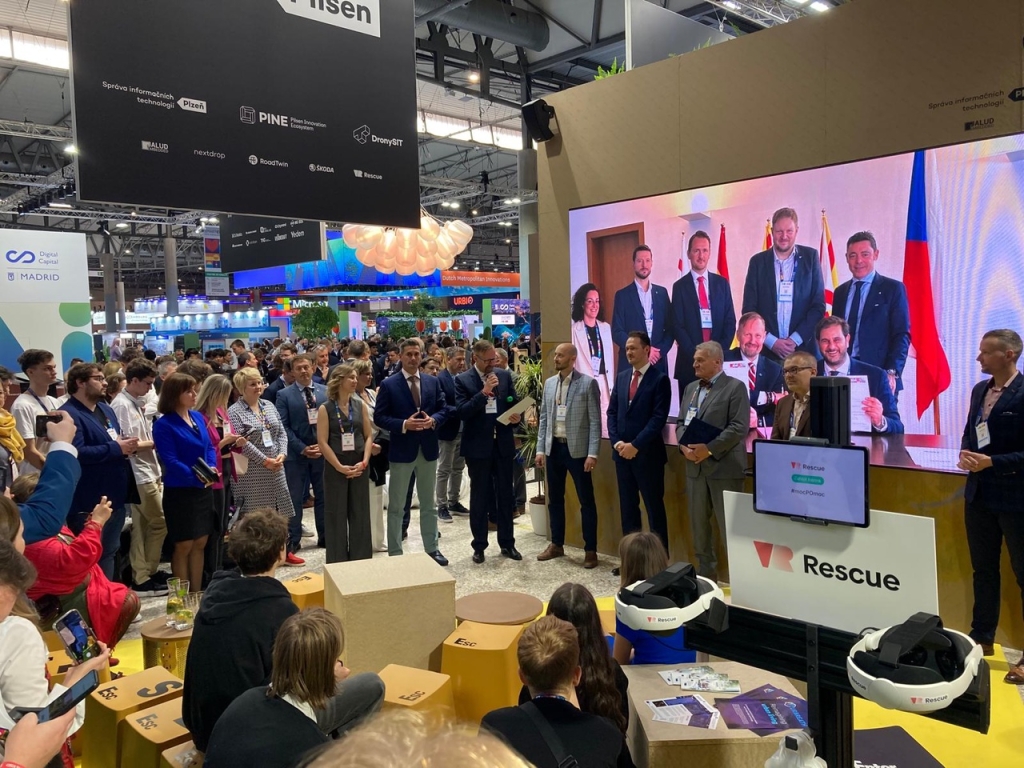
“Brno’s participation in the Smart City Expo World Congress in Barcelona is now something I consider a given. Within the Czech Republic, Brno leads in science, research, and technology. At the expo, its good name will be represented by a delegation including city officials, Brno Trade Fairs, Technické sítě Brno, and eight innovative companies. A key part of the event is networking with potential partners and sharing experiences in the use of smart technologies for urban services,” said Brno Mayor Markéta Vaňková.
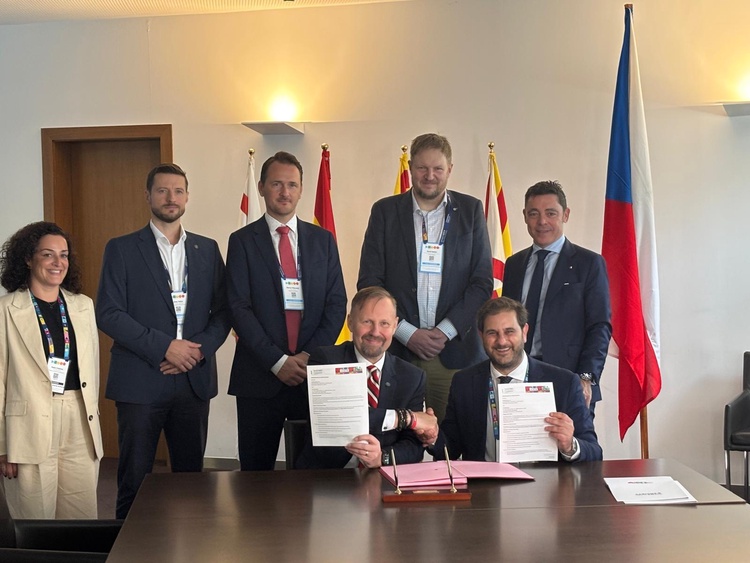
This year’s participation is especially significant for Brno due to the signing of an important document.
“One of the highlights of this year’s expo is the signing of a Memorandum of Understanding between Brno Trade Fairs and Fira Barcelona. Thanks to this, the international Smart City Expo World Congress will closely collaborate with Brno’s URBIS The Smart Cities Meetup. I believe this will help elevate the Brno Exhibition Centre and URBIS to the next level,” added Martin Příborský, Brno City Councillor for Strategic Development, Metropolitan Cooperation, and ITI.
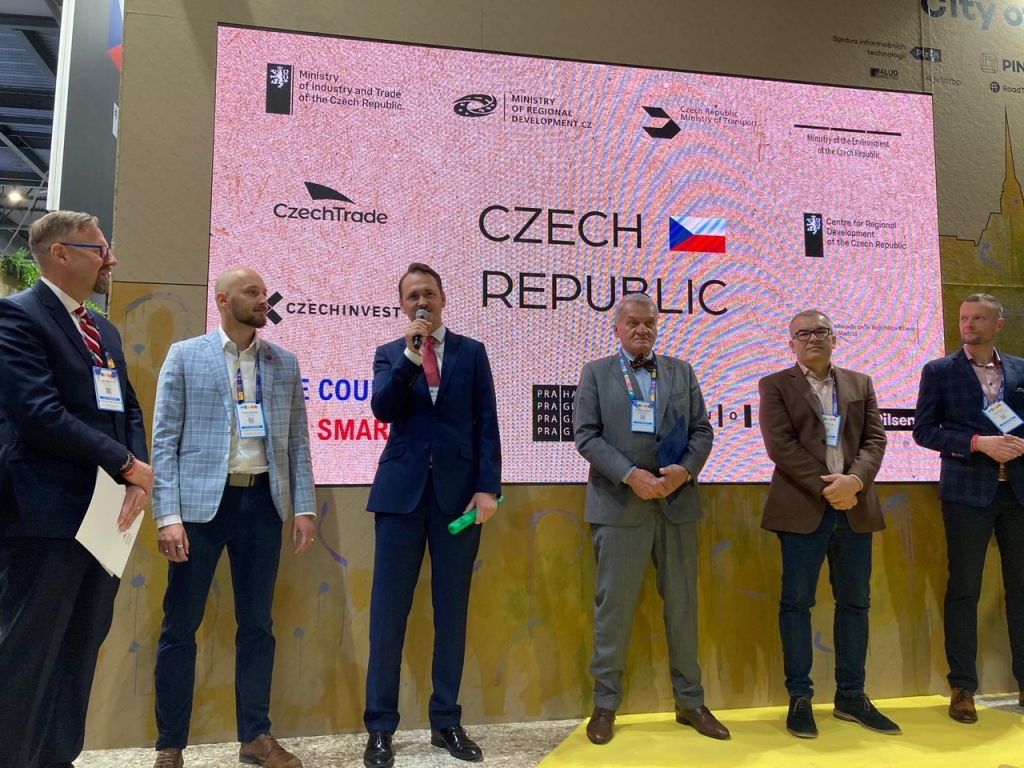
Thanks to participation in SCEWC in Barcelona, a unique collaboration has emerged in the Czech environment between the state, cities, and their ecosystems. Of the total 416 m² of the Czech exhibition, 216 m² are provided and co-financed by Prague, Brno, and Plzeň, while the remaining 200 m² and the coordination role are handled by the state through the Ministry of Industry and Trade. This model confirms a fundamental Smart Cities principle — that collaboration leads to great results. And the Czech Republic is not stopping here. This year, Říčany, TIC Zlín, Olomouc, and Ostrava are also joining the national exhibition as co-exhibitors, visitors, or observers.


© Statutory City of Brno | All rights reserved
Design by Media Age s.r.o. | Created by inQool a.s.